Understanding the differences between queen bees and drones is essential for managing your hive—especially for beginner beekeepers. Here’s a clear guide to identifying these two distinct members of your colony:
🏆 The Queen Bee
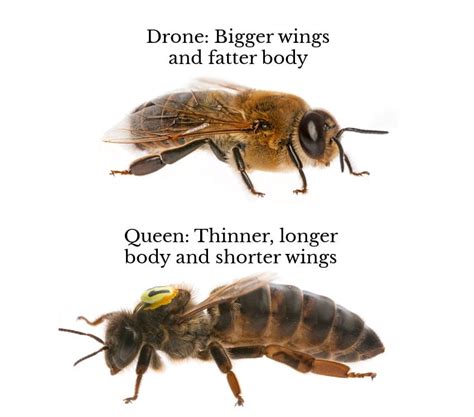
- Size & Shape: Long, tapered abdomen that extends well beyond her wings—much more elongated than drones or workers (en.wikipedia.org, dummies.com).
- Legs: Noticeably long and often lighter-colored, lacking pollen baskets (motherearthnews.com).
- Behavior & Role:
- Lays up to 1,500 eggs per day during peak season (en.wikipedia.org).
- Surrounded constantly by worker bees tending to her needs.
- Possesses a stinger but rarely uses it unless threatened.
- Special Markings:
- Often painted by beekeepers for easier identification.
- Virgin queen wings don’t fully cover her abdomen (en.wikipedia.org, justbeehoney.co.uk, beesource.com).
♂ The Drone
- Size & Shape: Thick, rounded abdomen. Compared to the queen’s sleek form, drones appear “barrel-chested” (dummies.com).
- Eyes: Massive compound eyes nearly meet at the top of their head—ideal for spotting the queen during mating flights (beeprofessor.com).
- Behavior & Role:
- Male bees whose sole purpose is to mate with a virgin queen (en.wikipedia.org).
- No sting, no pollen baskets, no hive duties (en.wikipedia.org).
- They live 90 days or until mating, after which they die (en.wikipedia.org).
- Appearance: Fatter than workers, with no stinger, no wax glands, and no foraging features (dummies.com).
🔍 Side-by-Side Comparison
| Feature | Queen | Drone |
|---|---|---|
| Abdomen | Long, tapered, extends past wings | Shorter, rounded “barrel” shape |
| Eyes | Moderate size, not touching | Very large, almost meeting top of head |
| Stinger? | Yes, but used rarely | No stinger |
| Pollen Baskets? | No | No |
| Legs | Long and slender | Shorter and thicker |
| Primary Role | Egg layer and colony reproducer | Mate with virgin queen |
🧠 Why It Matters
- Queen Identification:
- Spotting the queen helps assess colony health and ensures brood production.
- Look for her elongated abdomen among worker clusters.
- Drone Recognition:
- Indicates mating or potential swarming conditions—useful for swarm prevention.
- Drones appear when the colony is investing in reproduction or preparing for a new queen.
🧑🎓 Tips from Beekeepers
On r/Beekeeping, one user noted:
“You can tell the queens apart by the legs and long abdomen. Drones … by the fat stubby abdomens and eyes.” (dummies.com, thebfarm.com, beeprofessor.com, reddit.com)
✅ Final Takeaway
To accurately tell a queen from a drone:
- Check the abdomen: Long and sleek? That’s your queen. Short and stout? Probably a drone.
- Look at the eyes: Huge, meeting the head midline—drone.
- Assess the role: If it’s laying eggs, it’s definitely the queen (with a gentle sting).
With practice, you’ll quickly spot these key differences in the hive. Let me know if you’d like a similar guide comparing queen vs. worker!